ADHD diagnosis and management at Dr. Oldham gives families one ADHD doctor in Spanish Fork for both children and adults. Dr. Jedidiah Oldham, DO, a board-certified osteopathic physician practicing family medicine, obstetrics, and dermatology in southern Utah County, evaluates attention-deficit/hyperactivity disorder using validated tools like the Vanderbilt scale and the Adult ADHD Self-Report Scale (ASRS). You get evidence-based diagnosis, careful medication management, and behavioral strategies under one roof at 972 N 600 E, Spanish Fork, UT 84660.
ADHD care fits naturally inside Dr. Oldham’s whole-person approach to Mental Health across the lifespan. Whether your 7-year-old struggles in school or you suspect undiagnosed adult ADHD, you work with the same physician who knows your full history. Ready to start? Call 385-265-6060 to book an appointment.
TL;DR: Dr. Jedidiah Oldham, DO diagnoses ADHD using AAP and AAFP guidelines, the Vanderbilt scale (80% sensitivity, 75% specificity), and the adult ASRS. Stimulant medications help 70-80% of patients. About 4.4% of U.S. adults have ADHD, yet fewer than 20% are diagnosed. Titration follow-ups occur every 30 days with blood pressure and heart rate checks. Patient rating: 4.7 of 5 across 6 verified reviews. Accepting new patients in Spanish Fork.
How Is ADHD Diagnosed at Dr. Oldham?
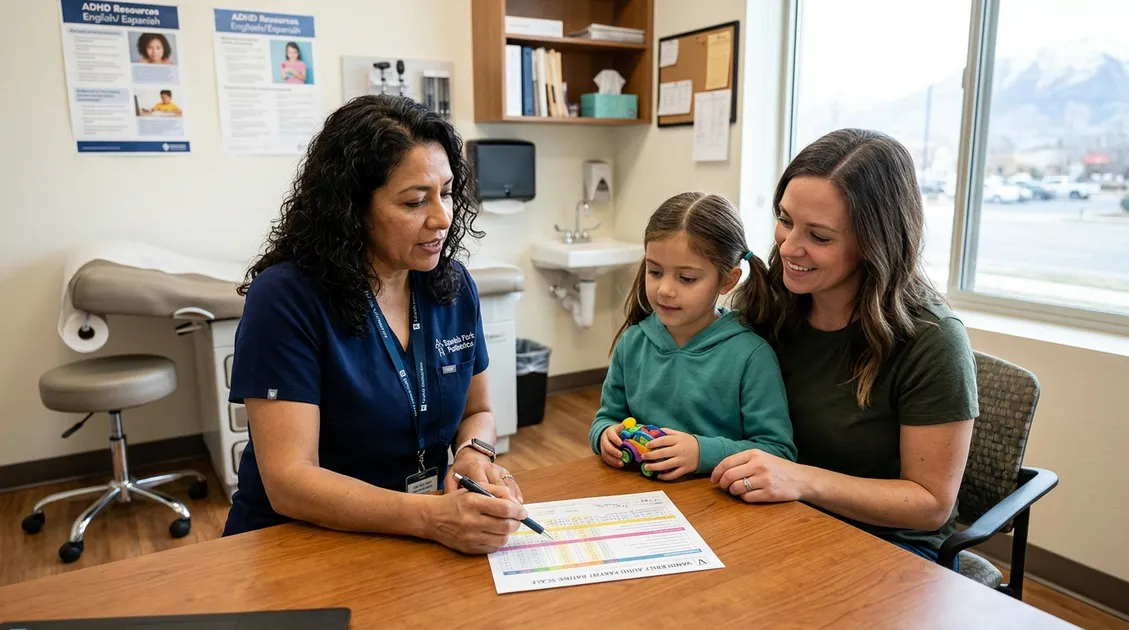
ADHD diagnosis at Dr. Oldham follows American Academy of Pediatrics and American Academy of Family Physicians guidelines, combining a clinical interview, validated rating scales, and collateral reports from parents or teachers across at least two settings. Dr. Jedidiah Oldham, DO uses the Vanderbilt Assessment Scale for children, which shows roughly 80% sensitivity and 75% specificity for ADHD, according to validation research in the Journal of Developmental and Behavioral Pediatrics. For adults, he applies the Adult ADHD Self-Report Scale (ASRS). A complete evaluation confirms that symptoms appeared before age 12, persist for six or more months, and impair daily function. Diagnosis never rests on a single questionnaire. Dr. Oldham reviews medical history, screens for conditions that mimic ADHD, and gathers school or workplace observations. This multi-step process protects you from both overdiagnosis and missed cases, and usually spans one to two visits before a care plan begins.
DSM-5 Criteria and Clinical Interview Process
DSM-5 criteria require at least six inattentive or hyperactive-impulsive symptoms in children under 17, or five symptoms for older teens and adults. Dr. Oldham conducts a 45-60 minute interview documenting symptom onset, settings, and functional impact at home, school, or work. The clinical interview anchors every diagnosis, because rating scales support but never replace a physician’s judgment.
Validated Rating Scales for Children and Adults
Vanderbilt scales gather input from both parents and teachers, capturing behavior across the two settings DSM-5 requires. Adults complete the 18-item ASRS, with the first 6 questions serving as the most predictive screen. These instruments quantify symptom severity so progress is measurable at every follow-up.
Ruling Out Other Conditions That Mimic ADHD
Thyroid disorders, sleep apnea, anxiety, depression, and iron deficiency can all imitate ADHD. Dr. Oldham orders point-of-care testing or lab work when the history suggests another cause, using differential diagnosis to confirm ADHD rather than assume it. This step matters most for adults presenting symptoms for the first time.
ADHD Symptom Self-Screen
A quick, validated-style screen based on the Adult ADHD Self-Report Scale (ASRS) and the Vanderbilt parent scale used at Dr. Oldham. This is an educational screen only — it never replaces a physician’s diagnosis.
Please answer all questions before viewing your result.
Screening tools like the ASRS and Vanderbilt scale support but never replace a clinical interview. The Vanderbilt scale shows roughly 80% sensitivity and 75% specificity. DSM-5 requires symptoms before age 12, lasting 6+ months, with impairment across at least two settings. A confident diagnosis requires evaluation by Dr. Jedidiah Oldham, DO — 972 N 600 E, Spanish Fork, UT 84660.
What ADHD Treatment Options Does Dr. Oldham Provide?
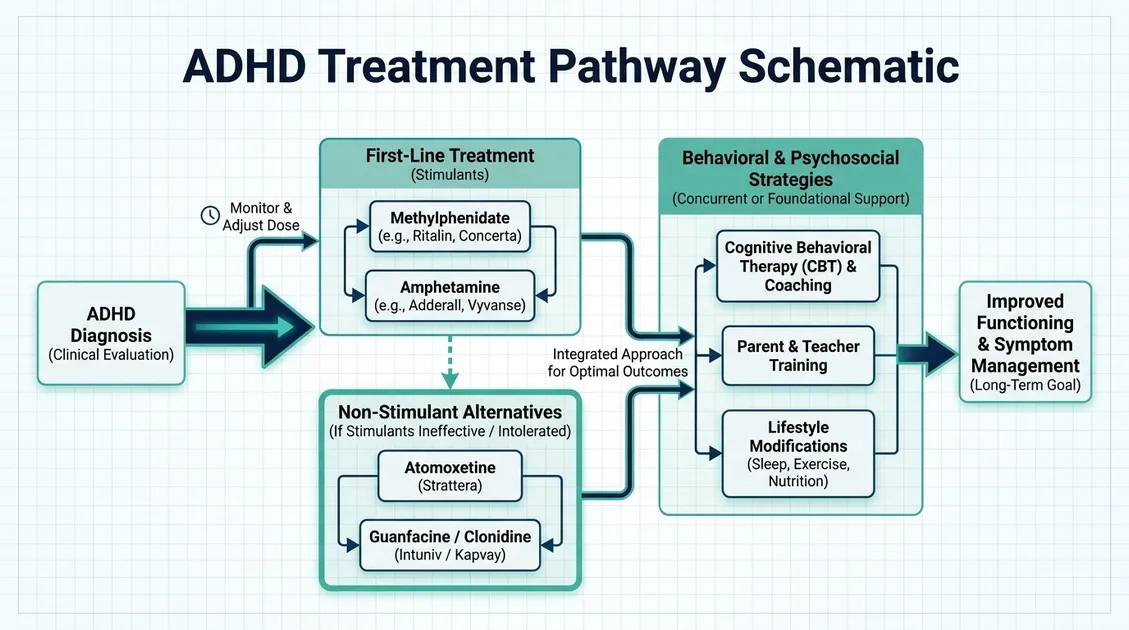
ADHD treatment at Dr. Oldham spans medication, behavioral strategies, and accommodation support, individualized to each patient. Stimulant medications remain the most effective option, with a response rate near 70-80% across children and adults, according to a network meta-analysis published in The Lancet Psychiatry. Dr. Jedidiah Oldham, DO prescribes first-line stimulants such as methylphenidate and amphetamine salts, then offers non-stimulant alternatives like atomoxetine or guanfacine when side effects, cardiac history, or patient preference make stimulants unsuitable. Treatment pairs medication with behavioral coaching, sleep and exercise routines, and school or workplace coordination. Generic stimulants cost $15-$40 monthly with insurance, based on industry estimates, keeping evidence-based care affordable. Because Dr. Oldham manages your full health picture, he watches for drug interactions with chronic disease medications too. You leave with a written plan, a clear dose target, and a follow-up schedule rather than a one-size prescription.
Stimulant and Non-Stimulant Medication Management
Methylphenidate and amphetamine-based stimulants work within 30-60 minutes and last 4-12 hours depending on formulation. Atomoxetine, a non-stimulant, takes 2-6 weeks to reach full effect but avoids controlled-substance scheduling. Dr. Oldham starts low and titrates slowly to find your effective dose with the fewest side effects.
Behavioral Strategies and Lifestyle Modifications
Behavioral strategies include structured routines, external reminders, body-doubling, and 20-30 minutes of daily physical activity, which research links to improved focus. For children, parent training in behavior management is a proven first step. These tools strengthen executive function alongside, or sometimes instead of, medication.
School and Workplace Accommodation Support
Dr. Oldham documents diagnoses to support 504 Plans, IEP evaluations, and workplace accommodations under the ADA. Coordination with teachers and counselors helps children access extended test time or preferential seating. For ADHD that overlaps with weight concerns from medication appetite changes, our weight management and obesity supports the whole picture.
Can Adults Be Diagnosed With ADHD for the First Time?
Adults absolutely can be diagnosed with ADHD for the first time, and many are. Approximately 4.4% of U.S. adults have, yet fewer than 20% are currently diagnosed and treated, according to National Institute of Mental Health data drawn from the National Comorbidity Survey Replication. ADHD does not begin in adulthood, but it is frequently recognized then, once school structure disappears and work, parenting, and finances expose long-standing patterns. Dr. Jedidiah Oldham, DO evaluates adults with the ASRS, a detailed history confirming childhood onset before age 12, and screening for anxiety or depression that often coexist. Adults present less hyperactivity and more internal restlessness, procrastination, missed deadlines, and emotional dysregulation. A first-time adult diagnosis opens the door to medication, executive function coaching, and accommodation. You are not too old, and a missed childhood diagnosis does not mean the condition isn’t real or treatable today.
Why Adult ADHD Is Often Missed
Dr. Jedidiah Oldham, our Family Medicine Physician & Obstetrician, DO, notes that many adults arrive only after a child’s evaluation prompts them to recognize the same patterns in themselves. Girls and high-achieving children especially slipped through earlier screening because they compensated through effort. That masking delays diagnosis by decades.
Adult ADHD Evaluation at Dr. Oldham
Adult ADHD evaluation pairs the 18-item ASRS with collateral input from a partner or old report cards when available. Dr. Oldham screens cardiovascular history before prescribing stimulants and reviews caffeine, sleep, and medication use. Telehealth visits make initial adult consultations convenient across Payson, Salem, and Springville.
How Does ADHD Management Differ for Children vs. Adults?
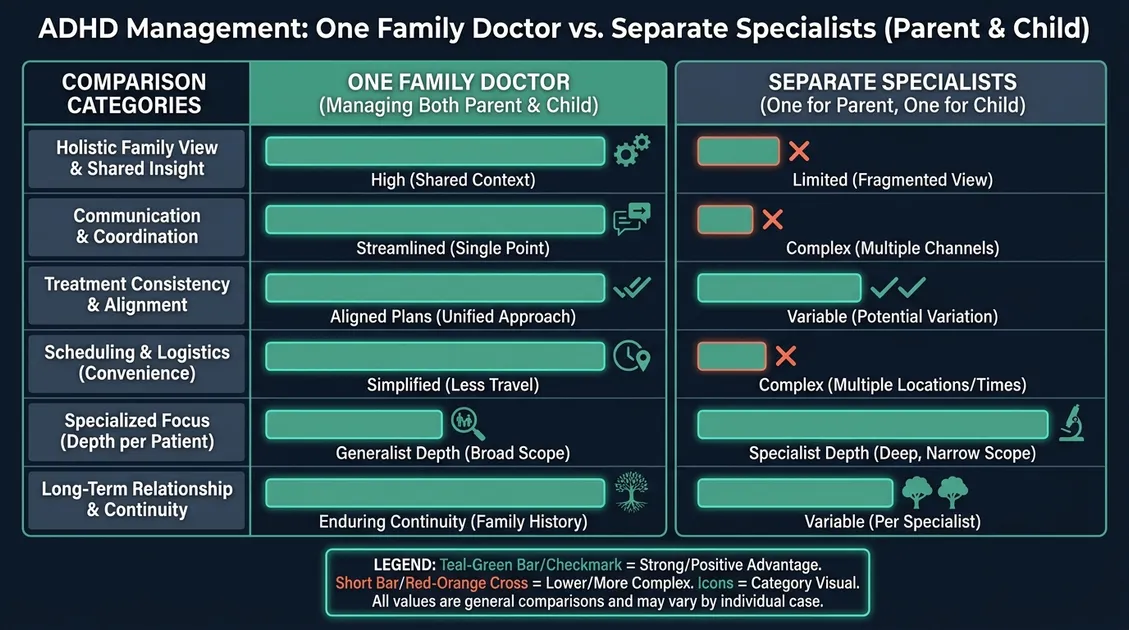
ADHD management differs sharply by age, and Dr. Jedidiah Oldham, DO tailors each plan accordingly. The American Academy of Pediatrics recommends behavioral therapy as first-line treatment for children ages 4-5, reserving medication for moderate-to-severe cases. For children 6 and older, the AAP advises FDA-approved medication combined with behavioral therapy. About 11.4% of U.S. children ages 3-17 have been diagnosed with ADHD, according to CDC data, making pediatric management common in Spanish Fork, where 37% of residents are under 18. Adults rely more heavily on medication paired with executive function coaching, organizational systems, and accommodation, since intensive parent-led behavior training no longer applies. Children also need growth, appetite, and sleep tracked on charts at each visit. Both groups benefit from continuity, which is why having one physician for the parent and the child streamlines care and protects against fragmented prescriptions.
| Factor | Children (4-17) | Adults (18+) |
|---|---|---|
| First-line approach | Behavioral therapy (ages 4-5); med + therapy (6+) | Medication + executive function coaching |
| Primary scale | Vanderbilt (parent + teacher) | ASRS (18-item self-report) |
| Key monitoring | Growth chart, appetite, sleep | Blood pressure, heart rate, mood |
| Coordination | School, 504/IEP plans | Workplace ADA accommodations |
| Visit frequency (titration) | Every 30 days | Every 30 days |
Pediatric ADHD: Behavioral Therapy First Approach
Pediatric ADHD care starts with parent training and classroom structure before stimulants for the youngest patients. Dr. Oldham coordinates with teachers and counselors so behavior plans stay consistent between home and school. Learn more about Pediatric Care across every age.
Adult ADHD: Medication and Executive Function Coaching
Adult ADHD management leans on medication plus practical systems: calendars, time-blocking, and reminder apps. For a deeper comparison, our article on how ADHD differs in children versus adults breaks down symptom presentation in detail.
How Much Does ADHD Diagnosis & Management Cost in Spanish Fork?
ADHD diagnosis and management costs in Spanish Fork depend on insurance, with most insured patients paying a $20-$50 office copay per visit, based on industry estimates for Utah primary care. Self-pay initial ADHD evaluations typically run $150-$350, while follow-up visits cost $75-$150, according to industry pricing data. Generic stimulant medications cost $15-$40 monthly with insurance, and non-stimulants like atomoxetine run $20-$60 generically. Dr. Oldham accepts major Utah insurers, so most families pay only their copay. Telehealth follow-ups reduce travel and time off work, an advantage for busy parents juggling school-week appointments. Because Dr. Jedidiah Oldham, DO handles diagnosis, prescribing, and monitoring himself, you avoid separate specialist referral fees that add $200-$400 elsewhere. Verify your specific plan before your first visit through our accepted insurance plans resource. Transparent pricing keeps evidence-based ADHD care within reach for Spanish Fork’s growing, young community.
| Service | With Insurance | Self-Pay |
|---|---|---|
| Initial ADHD evaluation | $20-$50 copay | $150-$350 |
| Follow-up visit | $20-$50 copay | $75-$150 |
| Generic stimulant (monthly) | $15-$40 | $30-$70 |
| Non-stimulant (monthly) | $20-$60 | $50-$120 |
| Telehealth follow-up | $20-$50 copay | $75-$125 |
Accepted plans include SelectHealth, PEHP, Regence BlueCross BlueShield, EMI Health, Medicaid, Medicare, and CHIP. If your plan isn’t listed, call 385-265-6060 and our staff will verify coverage before you book.
Why Choose Dr. Jedidiah Oldham, DO for ADHD Care?
Dr. Jedidiah Oldham, DO offers Spanish Fork families rare continuity: one board-certified physician who diagnoses and manages ADHD for both parents and children across the lifespan. He earned his Doctor of Osteopathic Medicine degree from A.T. Still University in Kirksville in 2013, completed a 4-year general surgery residency at Beaumont-Trenton in Detroit, and finished family medicine residency in Billings, Montana. Board-certified by the American Osteopathic Board of Family Physicians in Family Practice and OMT, he brings deeper diagnostic training than most family doctors. Based on Dr. Jedidiah Oldham, DO’s data, the practice holds a 4.7 out of 5 star rating across 6 verified reviews and is accepting new patients in 2026. A Utah County native serving the community he grew up in, Dr. Oldham has spent 7 years building trust in Spanish Fork. You get telehealth access, online scheduling, and whole-person care under one roof.
ADHD doctor Spanish Fork for Dr. Jedidiah Oldham DO hear from Spanish Fork parents that their biggest worry is whether stimulant medication will change their child’s personality. Dr. Oldham starts at the lowest dose and titrates slowly, adjusting based on how your child responds, and families consistently mention in reviews how unhurried and thorough his appointments feel. That cautious, patient-first approach is what continuity makes possible.
What Should You Expect During ADHD Follow-Up Visits?
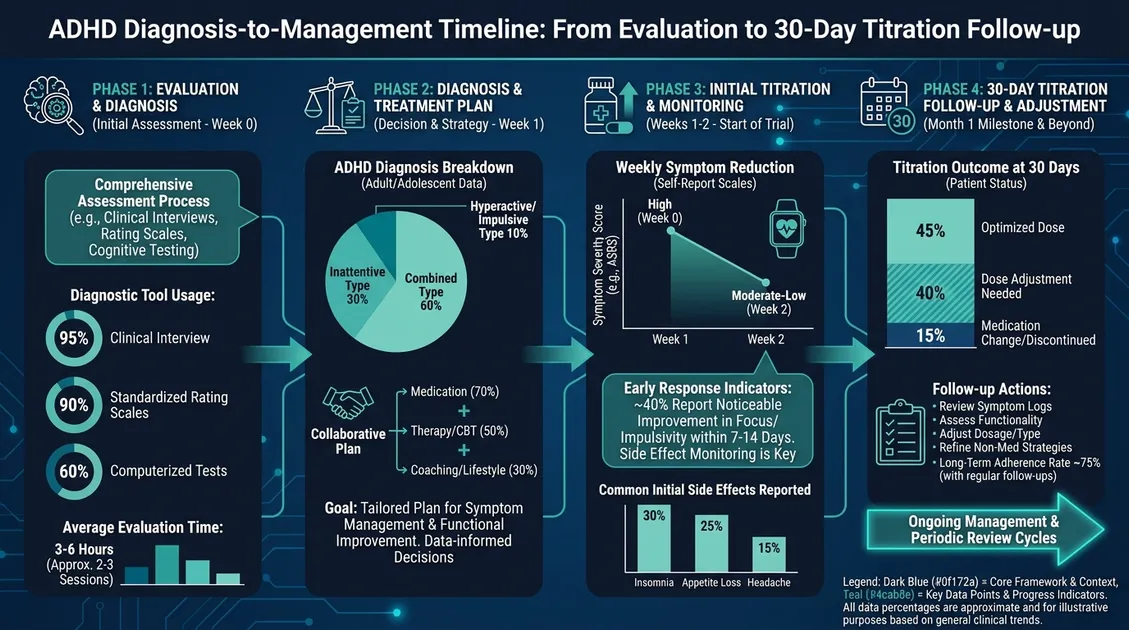
ADHD follow-up visits at Dr. Oldham occur every 30 days during medication titration, then every 3-6 months once stable. Stimulant medications can raise systolic blood pressure by 3-5 mmHg and heart rate by 3-6 beats per minute, according to the American Academy of Pediatrics, so Dr. Jedidiah Oldham, DO checks vital signs at each visit. For children, he tracks height and weight on growth charts because stimulants can suppress appetite. Each visit re-administers a Vanderbilt or ASRS rating scale to measure symptom improvement objectively rather than by impression alone. Dr. Oldham asks about sleep, mood, side effects, and how school or work is going, adjusting the dose or switching medication when needed. Controlled-substance prescriptions for stimulants require an in-person or telehealth check-in, which Utah regulations support. A scenario our team encounters often is a dose that worked in fall needing adjustment by spring as a child grows, which is exactly why regular monitoring matters.
Medication Monitoring and Side Effect Management
Common side effects include reduced appetite, trouble sleeping, and irritability as a dose wears off. Dr. Oldham manages these by timing doses, adding snacks, or switching formulations. Blood pressure and heart rate are documented at every titration visit to catch cardiovascular changes early.
Progress Tracking With Rating Scales
Repeating the Vanderbilt or ASRS at intervals turns subjective progress into measurable data. A drop from 8 endorsed symptoms to 3 confirms the plan is working. These numbers guide whether to hold, raise, or change the medication.
How long does an ADHD diagnosis take at Dr. Oldham?
ADHD diagnosis usually takes one to two visits over 2-4 weeks. The first 45-60 minute visit covers history and rating scales, while the second reviews collateral reports from teachers or partners and confirms the diagnosis before starting treatment.
Does Dr. Oldham prescribe stimulant medication for ADHD?
Yes. Dr. Jedidiah Oldham, DO prescribes first-line stimulants like methylphenidate and amphetamine salts, which help 70-80% of patients. He also offers non-stimulants such as atomoxetine when stimulants aren’t appropriate, and monitors blood pressure and heart rate at follow-ups.
Can a family medicine doctor diagnose and treat ADHD?
Yes. Family medicine physicians diagnose and manage ADHD using the same AAP and AAFP guidelines specialists follow. Roughly 75% of U.S. ADHD prescriptions originate in primary care, and Dr. Oldham handles evaluation, prescribing, and monitoring without requiring a separate specialist referral.
At what age can a child be evaluated for ADHD?
Children as young as 4 can be evaluated under AAP guidelines. For ages 4-5, behavioral therapy comes first, with medication considered for moderate-to-severe cases. Most pediatric diagnoses happen between ages 6 and 12 once school demands reveal symptoms.
Are telehealth ADHD appointments available in Spanish Fork?
Yes. Telehealth ADHD follow-ups are available for established patients across southern UTAH County, including Payson, Salem, and Springville. Initial diagnostic visits and stimulant titration may require in-person vital sign checks, but ongoing management often works well virtually.
Book Your ADHD Appointment in Spanish Fork
ADHD care starts with one phone call to Dr. Oldham at 385-265-6060 or through online scheduling. Dr. Jedidiah Oldham, DO is accepting new patients in 2026 at 972 N 600 E, Spanish Fork, UT 84660. When you call, our staff verifies your insurance, books your 45-60 minute evaluation, and sends intake and rating-scale forms to complete beforehand. Most new patients are seen within 1-2 weeks. Whether you need a Vanderbilt evaluation for your child or a first-time adult ADHD assessment, you’ll work with the same physician every visit. Explore Dr. Oldham’s full scope across mental and behavioral health to see how ADHD management fits your family’s needs. Call today and take the first step toward focus and follow-through. We have been doing this work since 2019 — 7+ years of hands-on experience.
Request an ADHD Appointment
Dr. Oldham — Dr. Jedidiah Oldham, DO. Accepting new patients in Spanish Fork. Fill in the details below, then continue to book.